
A family chore app for the jobs everyone shares.
Bins to bring in. Laundry to fold. A school form to remember. Put household jobs in one shared place, assign them to family members and see what still needs doing.
For the ordinary work that makes a home run.
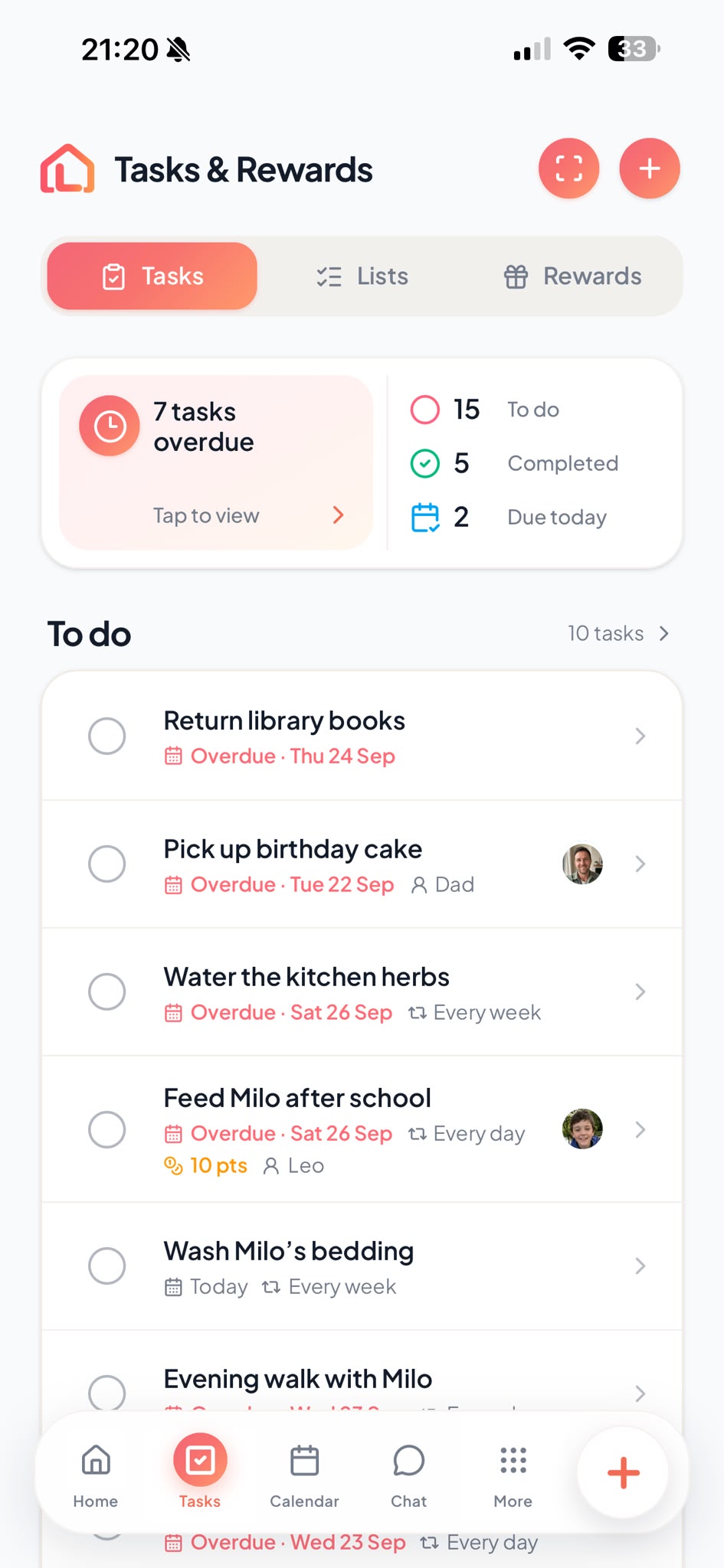
Share household chores fairly.
Family life is full of things that need doing but rarely make it onto a calendar. Put each job where everyone can find it, from a two-minute tidy-up to preparing for visitors.
Fair does not have to mean identical. Talk together about who has time, who can do the job and what is age-appropriate, then give each task an assignee instead of leaving it to whoever notices first.
A closer look at the everyday.
From assigning a repeating chore to seeing what got done, the details stay close to the job.
Make it someone’s job, not everyone’s mental note.
Choose who’s taking it on, when it’s due and whether it needs to happen again.
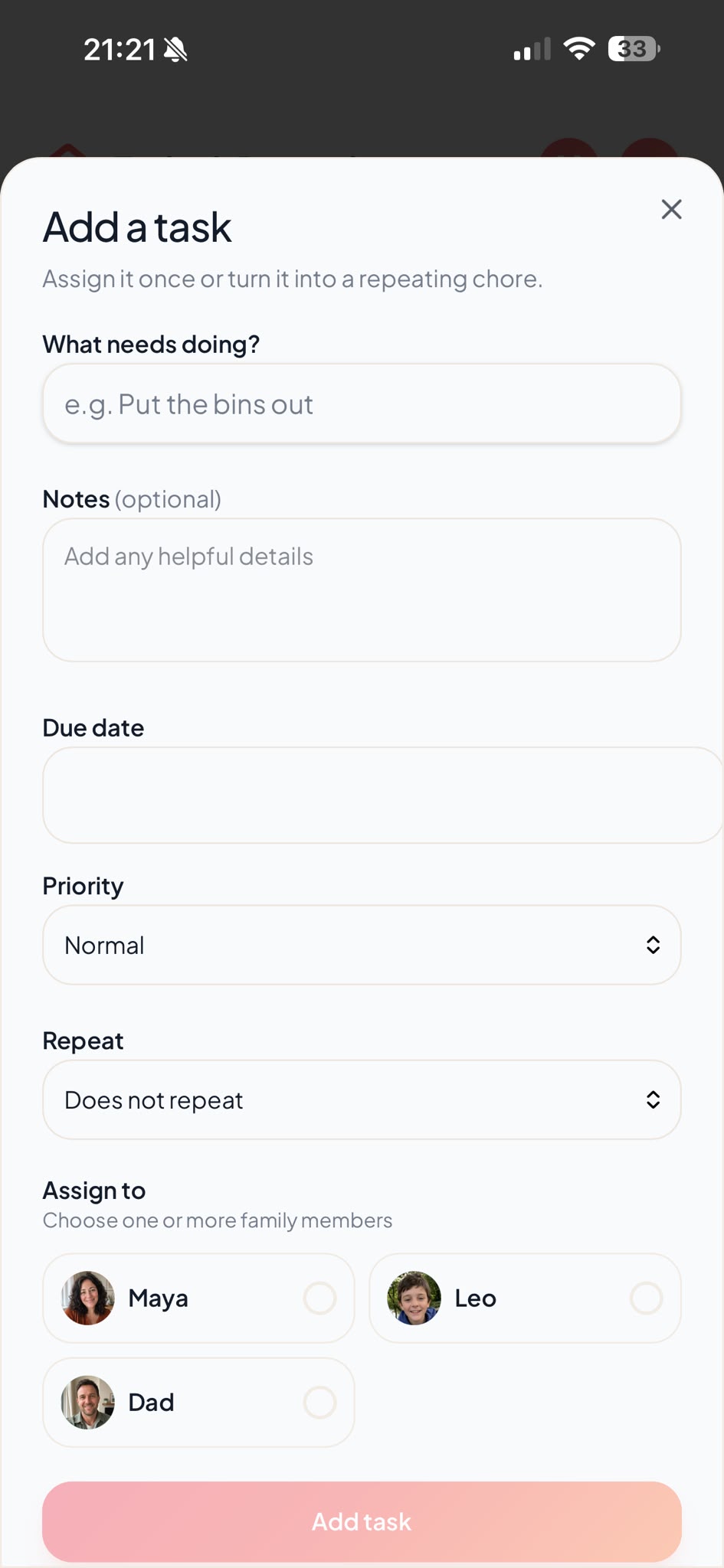
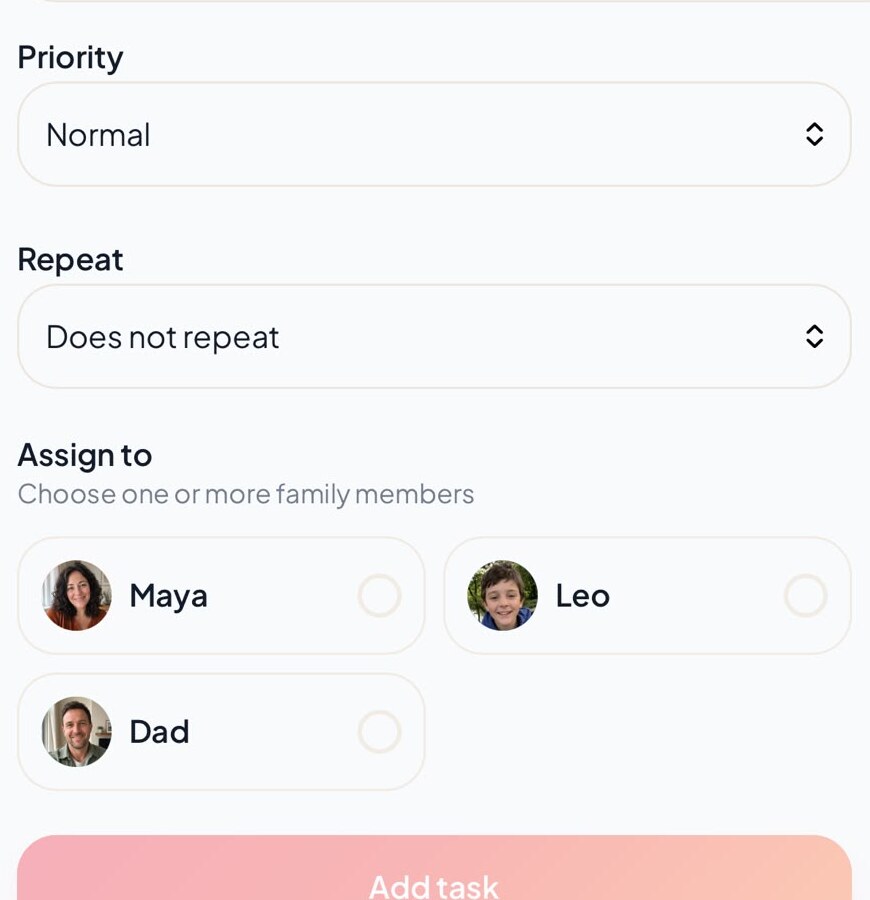
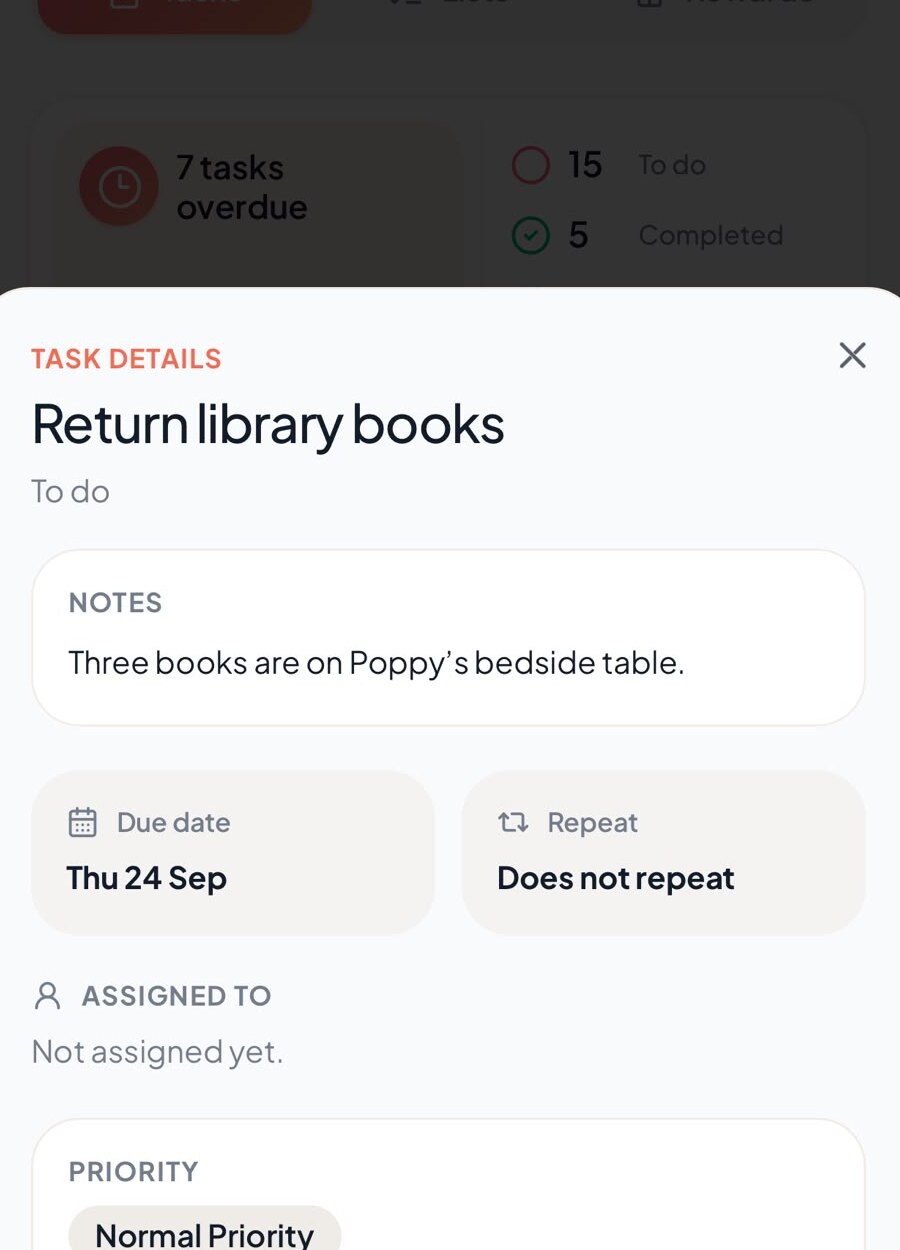
Notes, due dates and repeat settings stay with the task, not in a separate message.
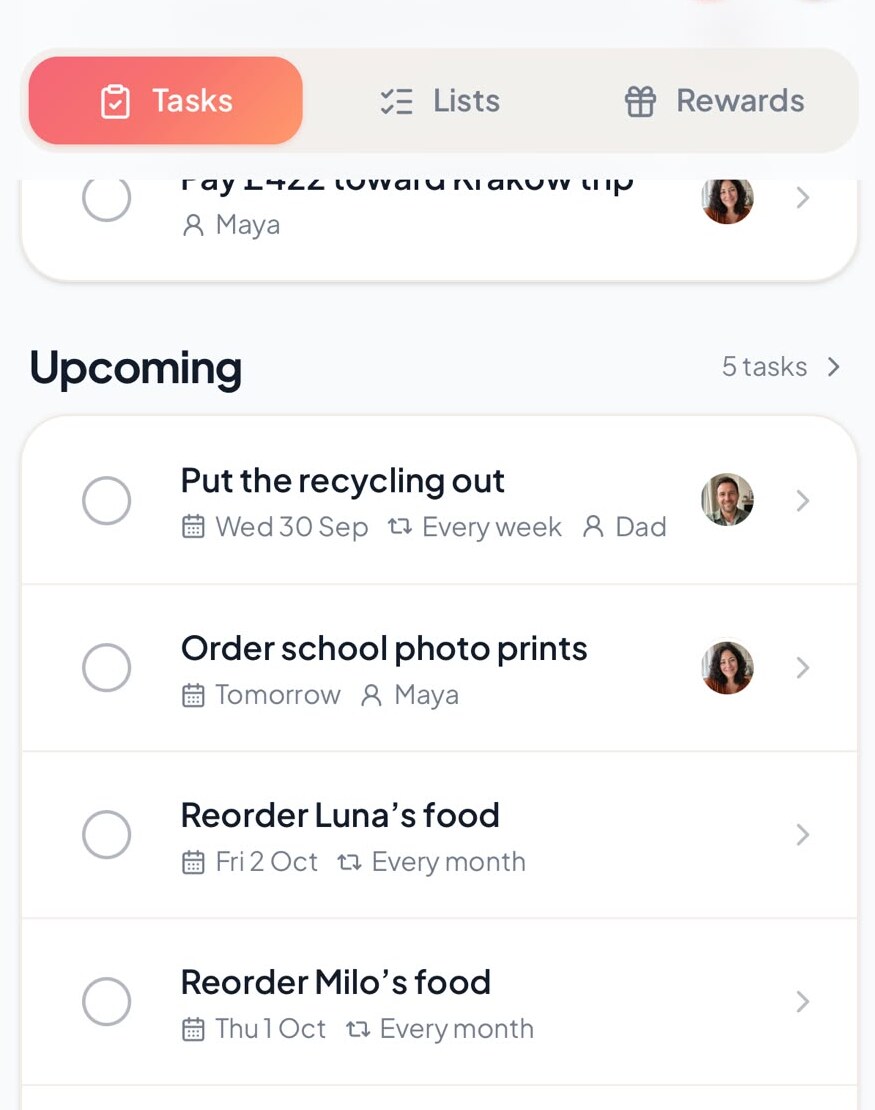
A clear view of the jobs that are coming up.
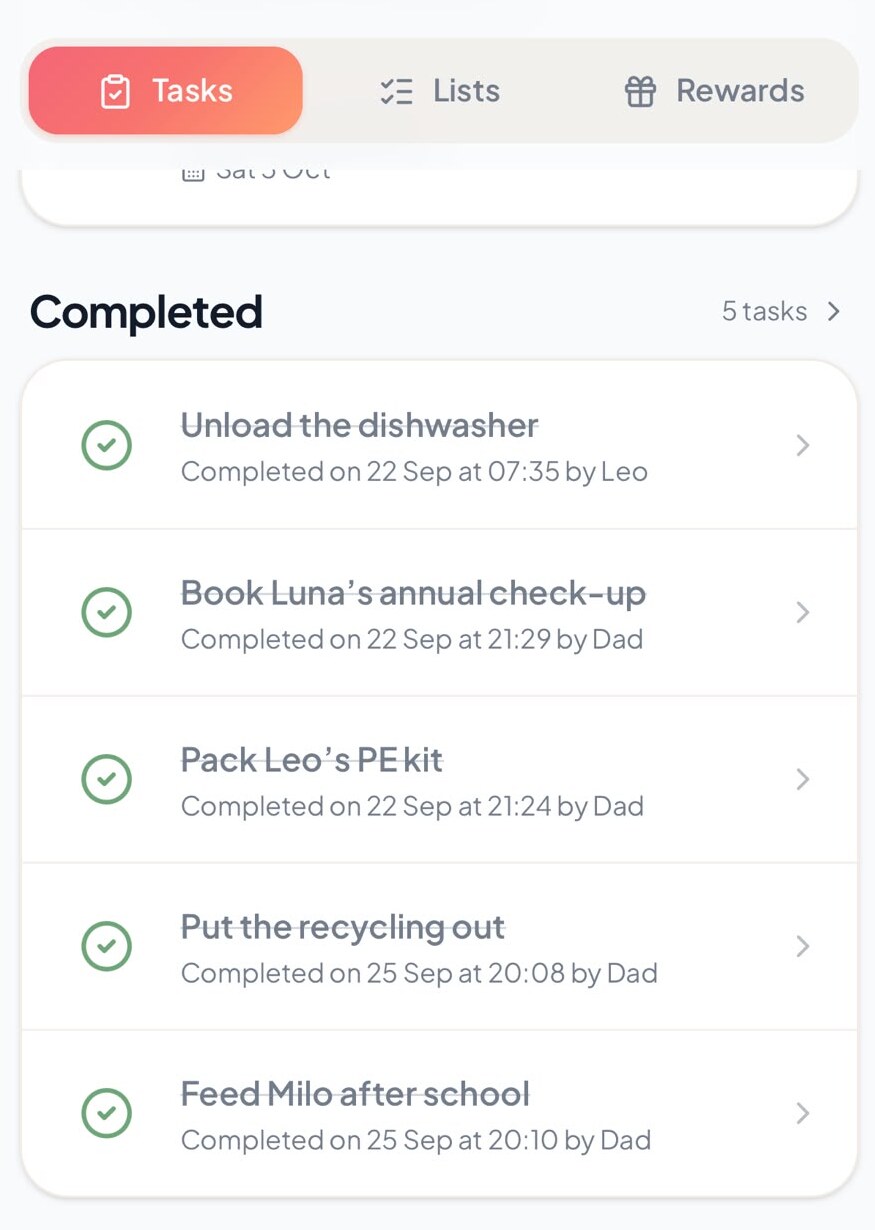
See the work your family has already checked off.
Some things are better kept together.
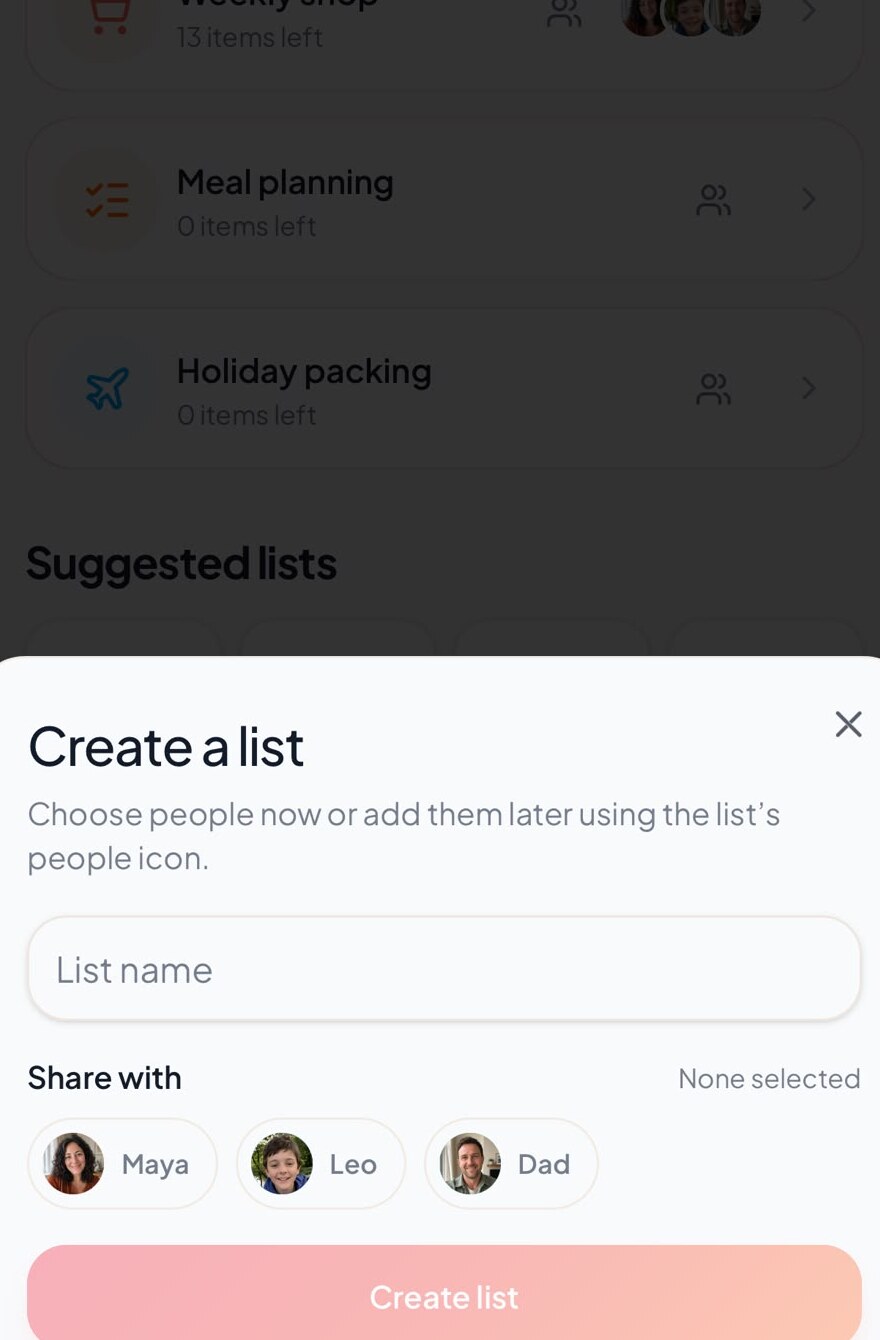
Keep a weekly shop, meal plan or holiday packing list close to the family’s jobs. Share each list with the people who need it.
Explore Shared Lists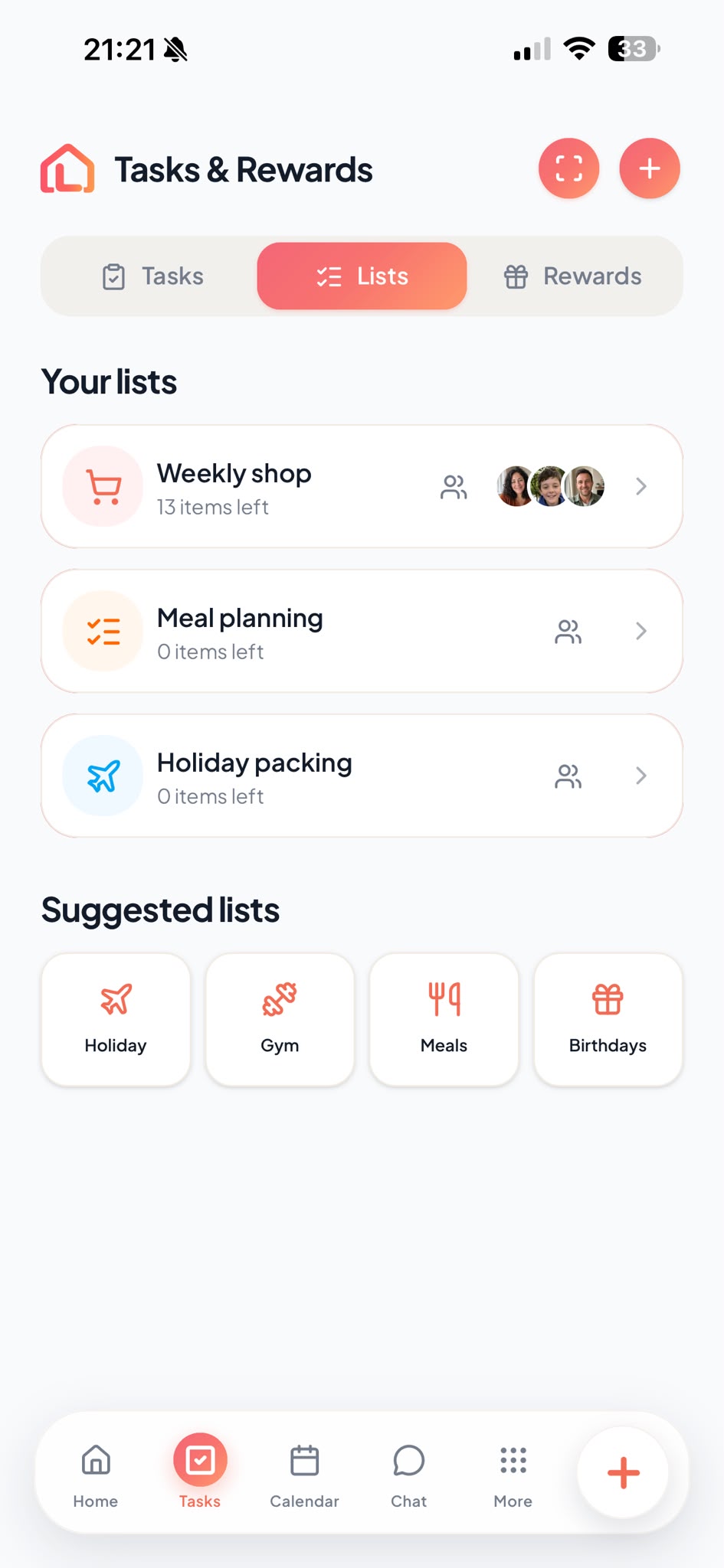
From “someone should” to a plan.
Give the job an owner and a place in the week. Start with the small things your family actually needs to remember.
Assign chores to family members
Put a name beside the bins, the laundry or the school bag so everyone knows who is taking it on.
Set due dates and priorities
Mark what needs doing today and what can wait; a school form due tomorrow is different from tidying a drawer.
Make weekly chores repeat
For the jobs that come round again, use a repeating task instead of writing the same reminder each week.
See what is done and what is overdue
Check completed and outstanding work together, then decide what needs attention next.
Chores for every age.
These are starting ideas, not rules. Choose jobs that fit your child’s ability, supervise where needed and adjust as they grow. For a full list, see our guide to chores for kids by age.
Little helpers
Tidying toys or setting the table.
Older children and teens
Emptying the dishwasher, doing their own laundry or cooking a familiar meal.
Turn finished chores into rewards.
Some families use points to recognise jobs completed and let children work towards a reward they have chosen. Keep the conversation about effort, not just the tally.
See how family rewards workA task is part of a bigger day.
The school fair on the calendar might mean baking something, picking up supplies and telling the family what time to leave. Keep the jobs close to the plans and conversations around them.
Family chore app FAQs.
How do I share chores fairly?
Start with the jobs that actually need doing, then talk about time, ability and preferences. Assign each task to someone, use priorities for the urgent ones and revisit the split when the week changes. Fair does not have to mean everyone does the same job.
Can chores repeat every week?
Yes. Set a repeating task for jobs such as putting out the bins or changing bed linen, so the routine does not depend on someone remembering to write it down again.
Can children use Lerra for their chores?
You can assign age-appropriate household tasks to family members. For younger children, choose simple jobs and work through the list together; what they can do independently depends on your family.
What is the difference between a task and a calendar event?
A calendar event is for something happening at a time, like a school fair. A task is the job you need to do around it, like baking or buying supplies. You can keep both in the same family space.
A little less “did anyone do it?”
Bring your people and the everyday details into one shared place. Start with your family, then make it yours.